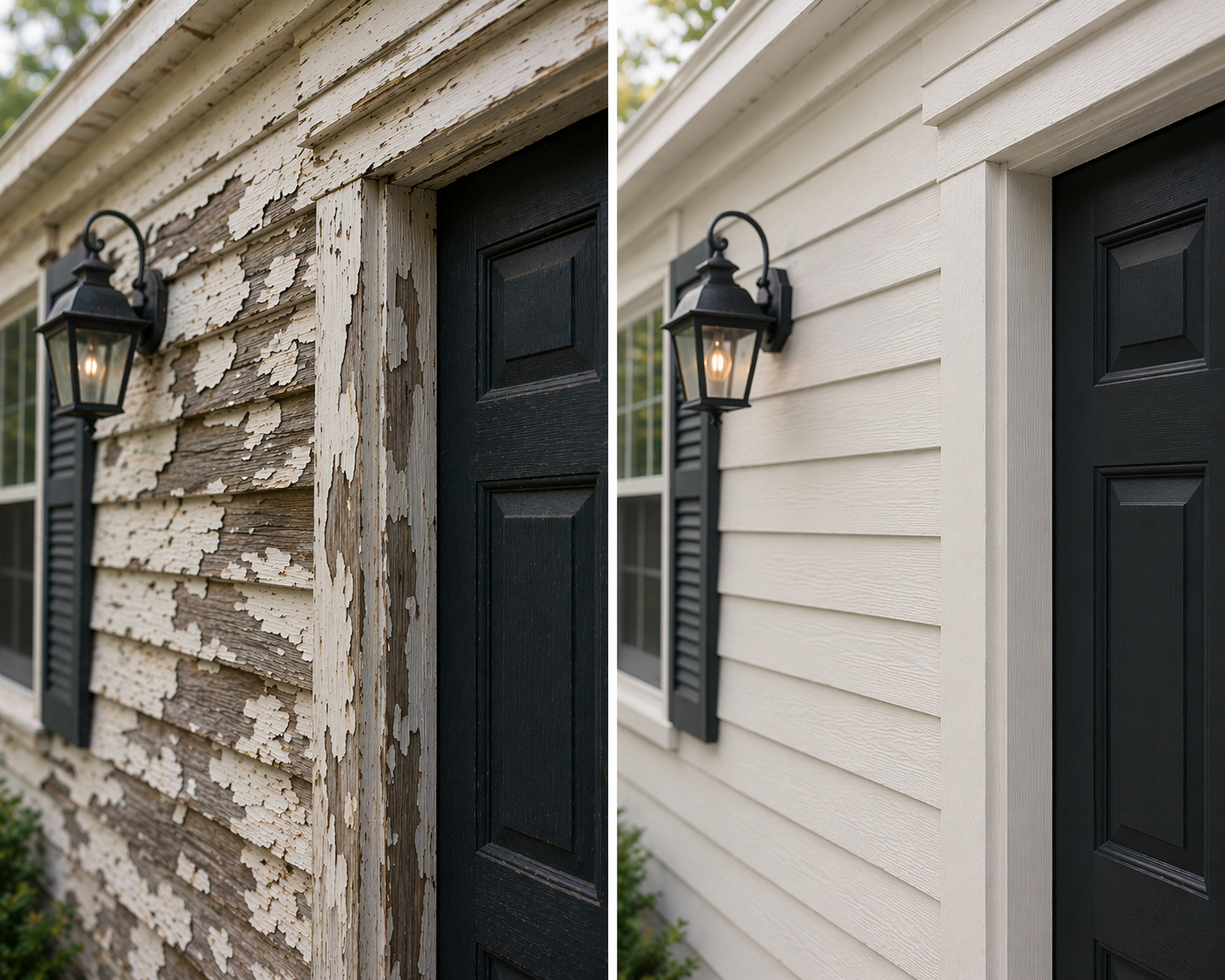
If you’ve recently taken a walk around your neighborhood, you may have noticed it—peeling paint showing up on front doors, trim, siding, and other exterior surfaces.
As we’ve been out providing estimates this spring, it’s one of the most common issues we’re seeing across homes of all ages and styles.
So why is this happening right now? And more importantly, what does it mean if your home is starting to show the same signs?
The Real Reason Paint Starts Peeling
Peeling paint isn’t just about age—it’s almost always a sign that something underneath the surface isn’t holding properly.
The most common causes include:
Moisture Getting Under the Paint Moisture is the number one culprit. Over time, water can seep behind paint through small cracks, gaps in caulking, or exposed wood. Once trapped, it pushes the paint away from the surface, causing bubbling and peeling.
Temperature Fluctuations Early spring is especially tough on exteriors. We go from warm, sunny days to cold nights—sometimes dropping into the 30s. That constant expansion and contraction stresses the paint film, weakening its bond.
Dark Colors Absorbing Heat Surfaces like black or dark-colored doors and trim take on a lot of heat from the sun. That heat buildup, followed by cooler nighttime temperatures, accelerates paint breakdown and leads to premature failure.
Previous Prep Issues In many cases, peeling can be traced back to how the surface was prepared during the last paint job. If the surface wasn’t properly cleaned, sanded, or primed, the new paint simply won’t adhere long-term.
Why We’re Seeing It So Much Right Now
This time of year tends to reveal problems that have been building quietly over the winter.
- Moisture has had months to work its way into surfaces
- Freeze/thaw cycles have stressed the paint
- Warmer days are now causing materials to expand, making peeling more visible
In short: the damage didn’t just happen—it’s finally showing itself.
What Peeling Paint Means for Your Home
Peeling isn’t just a cosmetic issue. It’s a warning sign.
Once paint starts failing, it no longer protects the surface underneath. That can lead to:
- Wood deterioration
- Increased moisture intrusion
- More extensive (and expensive) repairs down the line
Addressing it early keeps the project focused on repainting—rather than repairs.
The Right Way to Fix It
A long-lasting exterior paint job starts well before the first coat goes on.
Proper preparation typically includes:
- Removing all failing paint
- Sanding and smoothing the surface
- Addressing any underlying moisture issues
- Priming bare or exposed areas
Skipping these steps is often what leads to the same peeling showing up again in a year or two.
Planning Ahead for Exterior Season
Right now, many homeowners are in the planning phase—getting estimates and evaluating the condition of their home before exterior work begins in full.
If peeling paint is starting to show up on your home, it’s a good time to take a closer look. Catching it early gives you more flexibility in timing and helps ensure the work is done under the right conditions for a long-lasting result.
Ready to Take the Next Step?
If you’re noticing peeling, bubbling, or other signs of paint failure, we’re currently scheduling estimates for the upcoming exterior season.
A professional evaluation can help determine what’s causing the issue—and what it will take to fix it the right way.
Reach out today to schedule your estimate and get your home ready for a smooth, durable finish this season.