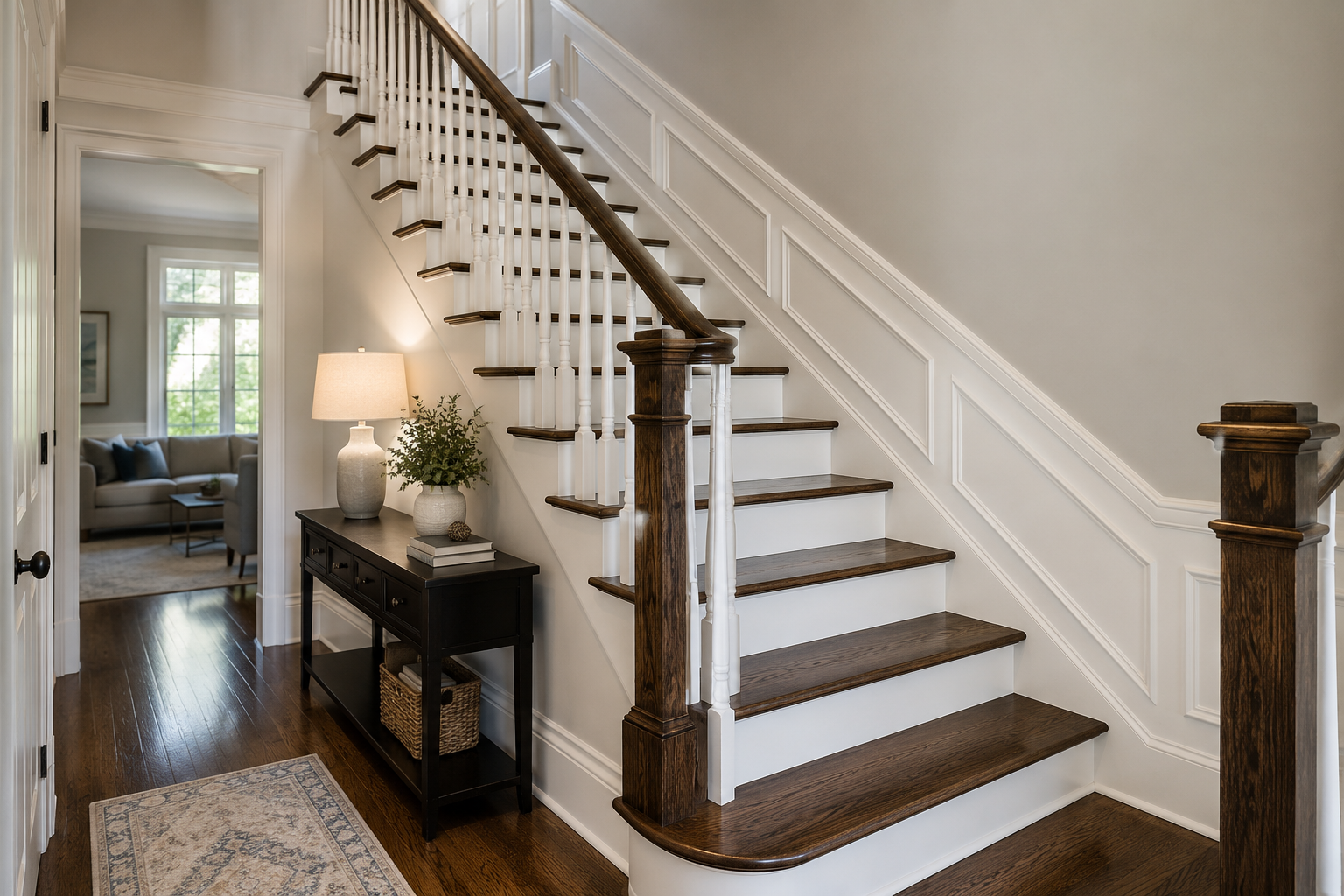
A staircase is one of the most frequently used and visually prominent features in any home—yet it’s also one of the most overlooked when it comes to maintenance and design updates.
Whether it’s the main staircase in a foyer or a secondary stairwell tucked toward the back of the home, this area quietly carries a lot of weight. It connects levels, guides traffic, and often sits at the center of daily movement. Over time, that constant use shows.
Why Staircases Wear Faster Than You Think
Unlike walls in lower-traffic rooms, staircases deal with constant contact—hands on railings, feet on treads, and repeated brushing against walls and trim. Even in well-maintained homes, this leads to:
- Scuffed and dull trim along stair edges
- Chipped or faded risers and stringers
- Worn handrails from daily contact
- Marked or smudged stairwell walls
- Subtle fading in high-light entry staircases
Because staircases are often vertically oriented and partially enclosed, imperfections tend to stand out more than in other areas of the home.
The Visual Impact of a Fresh Staircase
A freshly painted staircase doesn’t just look “clean”—it changes how the entire home feels.
In many homes, the staircase is visible from the entryway or main living space. That means it contributes heavily to first impressions. When it’s crisp and well-finished, it reinforces a sense of care and quality throughout the home.
On the other hand, worn stair trim or scuffed risers can make even an otherwise updated home feel slightly unfinished.
Where Detail Matters Most
Staircases are all about precision. The difference between “painted” and “finished” often comes down to detail work in areas like:
- Trim edges along walls and steps
- Consistent finish on handrails and balusters
- Clean transitions where stair parts meet drywall
- Smooth, even coverage on risers and stringers
These are areas where craftsmanship is especially noticeable, particularly in homes with open staircases or prominent entry foyers.
A Space That Connects the Whole Home
One of the most overlooked qualities of a staircase is its role as a transition space. It connects floors, design styles, and living areas. Because of that, it has to visually “belong” everywhere at once.
A well-maintained staircase helps unify the home’s design. It subtly ties together flooring, trim, and wall colors from different levels, making the entire space feel more cohesive.
When It’s Time to Refresh
Most homeowners don’t think about staircases until wear becomes obvious. But there are a few subtle signs it may be time for attention:
- Paint that no longer looks clean even after washing
- Visible wear along high-touch areas of the railing
- Chipping or uneven sheen on trim or risers
- A staircase that feels visually “tired” compared to updated rooms
Addressing these areas can quickly elevate the overall feel of the home without major renovation.
A Small Area With a Big Return
Because staircases are central, vertical, and highly visible, improvements here tend to have an outsized impact. A refreshed staircase often makes adjacent spaces—foyers, hallways, and living areas—feel newer as well.
It’s one of those areas where attention to detail quietly signals a well-maintained home.

Bringing It All Together
At Southington Painting, we often find that staircase projects deliver some of the most dramatic “before and after” transformations in a home—not because the space is large, but because it’s so central to daily life and visual flow.
If your staircase is starting to show its age, refreshing it can be one of the most effective ways to elevate your entire interior without changing the layout or design of your home.
Ready to Refresh Your Staircase?
If your staircase is looking worn, dated, or simply no longer matches the rest of your home, our team can help bring it back to a clean, polished finish with professional interior painting and trim work.
Contact Southington Painting today to schedule a consultation and get expert recommendations for your home.